
Aakar Patel is a writer and columnist. You can e-mail the author at aakar.patel@gmail.com

The judiciary, the police, the lawyers and the public will have to know the new laws. It will also endanger settled jurisprudence on the old laws and open up all sorts of minor and major problems that currently do not exist. Whose then was asking for the change? Not the judges or police or lawyers or citizens, points out Aakar Patel.

We should reassess what India's role in the world is and whether we are doing the right thing for ourselves, notes Aakar Patel.

Given the reality of the disparity and the enormous shift over the last 50 years, this can be done without an open and frank conversation with the people, something that has not begun and, knowing the style of our leader, is not expected to begin, asserts Aakar Patel.
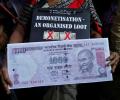
Events proved that on every count the RBI had accurately predicted both the damage and the lack of benefit. What the RBI was hiding was the fact that Modi had ignored its concerns -- all of which turned out to be true -- and gone ahead anyway, asserts Aakar Patel.

Despite the objections raised by Reserve Bank of India and Election Commission, India's politics has been funded anonymously and it is time to end this, asserts Aakar Patel.

For the longest time, the court did not even hear important matters that the government did not want it to. Of late, it has begun to form benches. Meanwhile a lot of the damage has been done and continues to be done, asserts Aakar Patel.

It is when one looks away from the immediate song and dance and at the granular detail of what has been going on since 2014 that one realises what the quality and competence of thinking and execution is in this project we call New India, asserts Aakar Patel.

An unofficial and brutal justice system exists parallel to the official one, and it executes many times more of the accused than the official one executes convicts, points out Aakar Patel.

One hopes, though one is not optimistic, that this action to some extent corrects the lunacy which has infected our national media and has damaged our nation, notes Aakar Patel.

This form of government, where secrets and major decisions are kept from the Cabinet itself, appears to be continuing, which is why the speculation around this special session, asserts Aakar Patel.

All progress in space should excite us and encourage us to be optimists about a better future for our planet and all of us, asserts Aakar Patel.
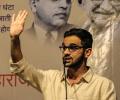
Arrested in September 2019 by the Delhi police for making 'provocative statements' when Donald J Trump was on his visit to India, Dr Umar Khalid has now spent three years in jail without being convicted of an offence, points out Aakar Patel.

'The linking of Aadhaar to births and deaths will revive the debate around citizenship.'

My followers and devotees will not have to suffer the trauma of seeing me accept that something wrong has happened under my watch, observes Aakar Patel.

India is attempting to soft-land a rover on the moon and will attempt, at some point next year hopefully, sending humans into orbit. All of this makes an exciting time for space around the world, notes Aakar Patel.

NITI Aayog has not said what the reasons were for having achieved or not having achieved what was sought to be achieved, or what lessons can be learned for the future, points out Aakar Patel.

Bhima Koregaon represents what the government can do in India against well meaning people who speak up against atrocities, who stand up for the weak and the dispossessed and for this reason alone as seen as enemies of the State and kept in prison for as long as the government can manage. So long as the rest of us do not speak up against this misbehaviour by the State, so long as we forget about those who have been made its victims, this behaviour will continue, asserts Aakar Patel.

In constitutional democracies the Opposition is legitimate and part of the legislature. To see it as the enemy and to try and get rid of it through convictions and expulsions is not democratic, asserts Aakar Patel.

Our focus is not on substance, but communicating how we did not shake hands and how we made angry faces. This is what India's foreign policy has become, notes Aakar Patel.

Given that the BJP made all these moves and that these moves were presumably approved by Modi if not directed by him, who should accept the responsibility for the party's rout? asks Aakar Patel.
